With growing awareness of neurodiversity, more and more organisations are wondering how best to integrate neurodivergent people into their teams. Can the presence of neurodivergent employees be a challenge? Or does it bring as yet undiscovered benefits?

Challenges related to neurodiversity
There is no denying that integrating neurodivergent people into a team may at first seem challenging. Differences in communication, working styles and sensory needs may require extra time to adjust and understand. For example, a person with ADHD may find it hard to concentrate for long periods on tasks that need detailed attention, and an autistic person may need a more predictable and calmer work environment.
Without recognising a given employee’s needs and looking objectively and without judgement at their attempts to adapt to unfavourable conditions, it will be hard for us to open up to supporting them in changing their work environment.
Hidden talents
However, the same traits that seem challenging can also mean unique talents. People with ADHD are often exceptionally creative and able to solve problems quickly. Autistic people, in turn, may show exceptional skills in concentration and accuracy — qualities valued in many industries and positions.
A competitive advantage
Organisations that actively include and support neurodivergent employees often experience greater innovation and creativity. Diverse teams are better able to understand the needs and expectations of different customer groups, which can lead to more thoughtful and tailored products or services.
We sometimes forget that difficulties in one area generate strengths in another. People learn to compensate for difficulties in everyday functioning. As a result, they sometimes develop unique traits and skills that can be considered talents.
We should also remember that being on a spectrum means a long scale; the possible challenges are not always highly intense. Many people are also unaware that they are on a spectrum. And if they are aware, they don’t always want to talk about it openly, for fear of stigma.
When we look at an employee and assess their work, we quickly jump to a diagnosis – e.g. weak communication or organisational skills, low stress resilience, etc… Most often we then send them on a training course to learn.
But what if this employee is on a spectrum and learning will bring little benefit in the short term? Or perhaps this employee simply has unique talents – but for a different kind of work, in different conditions?
Perhaps it is worth going on a training course yourself and finding out how this employee could be managed differently?
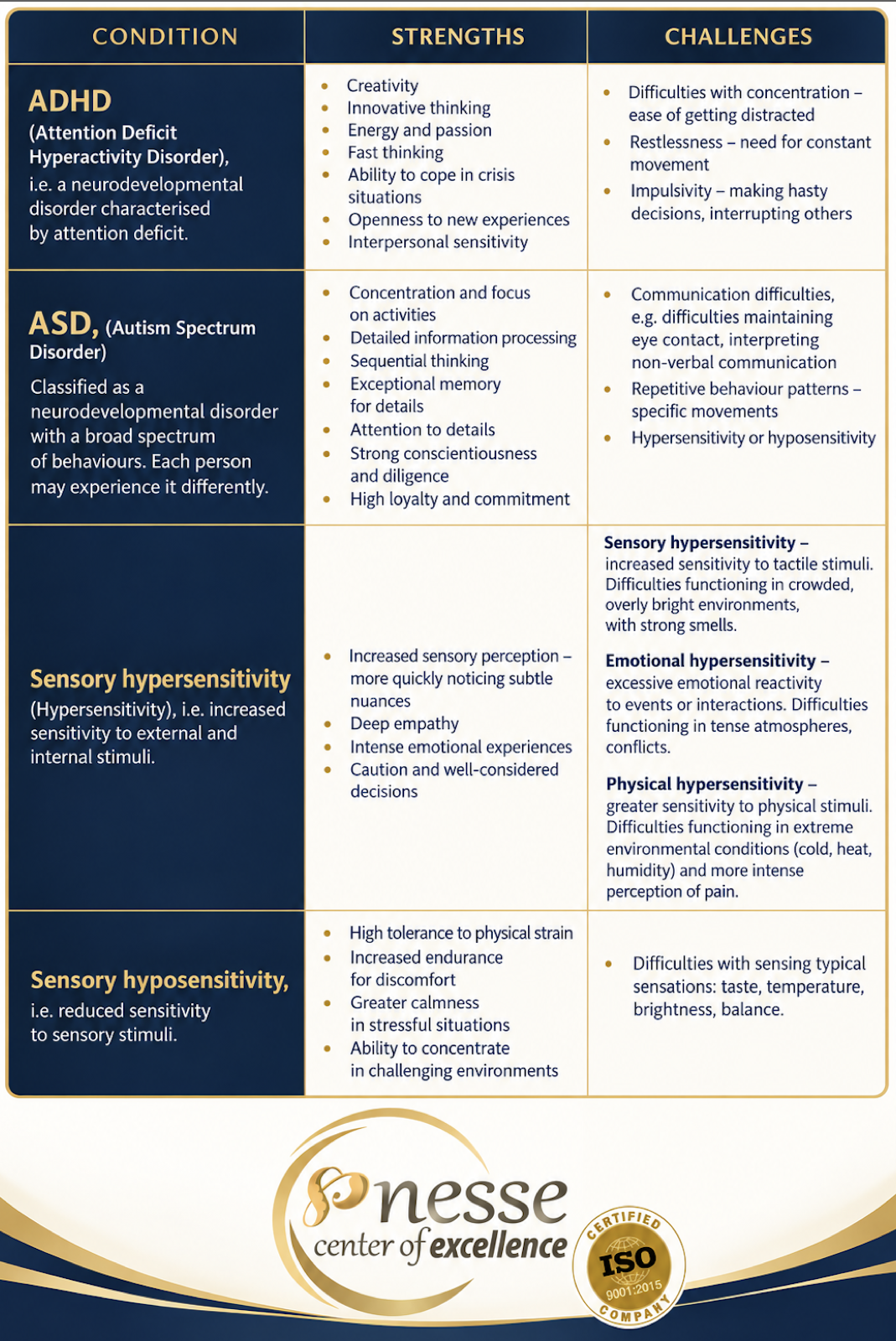
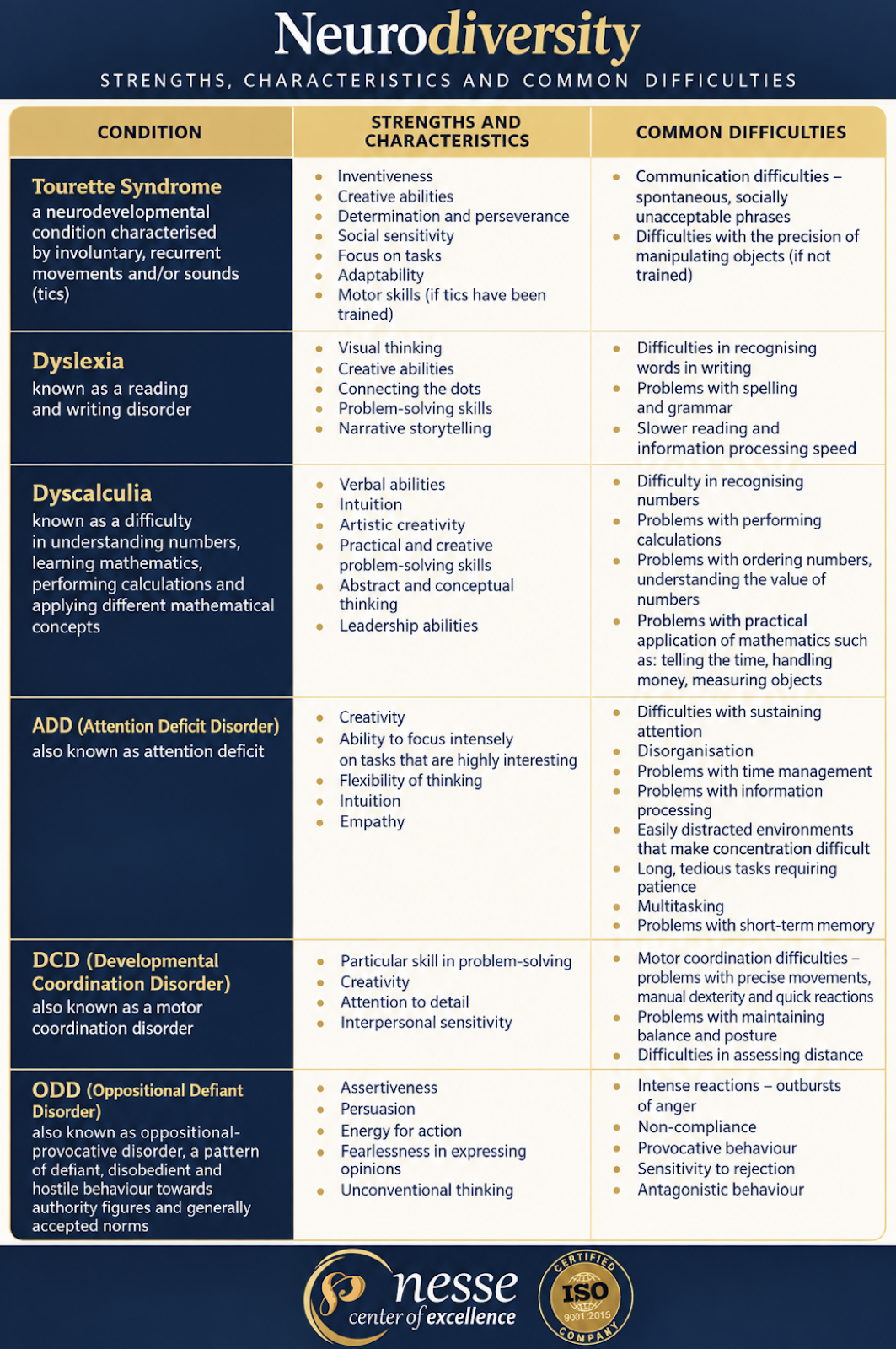
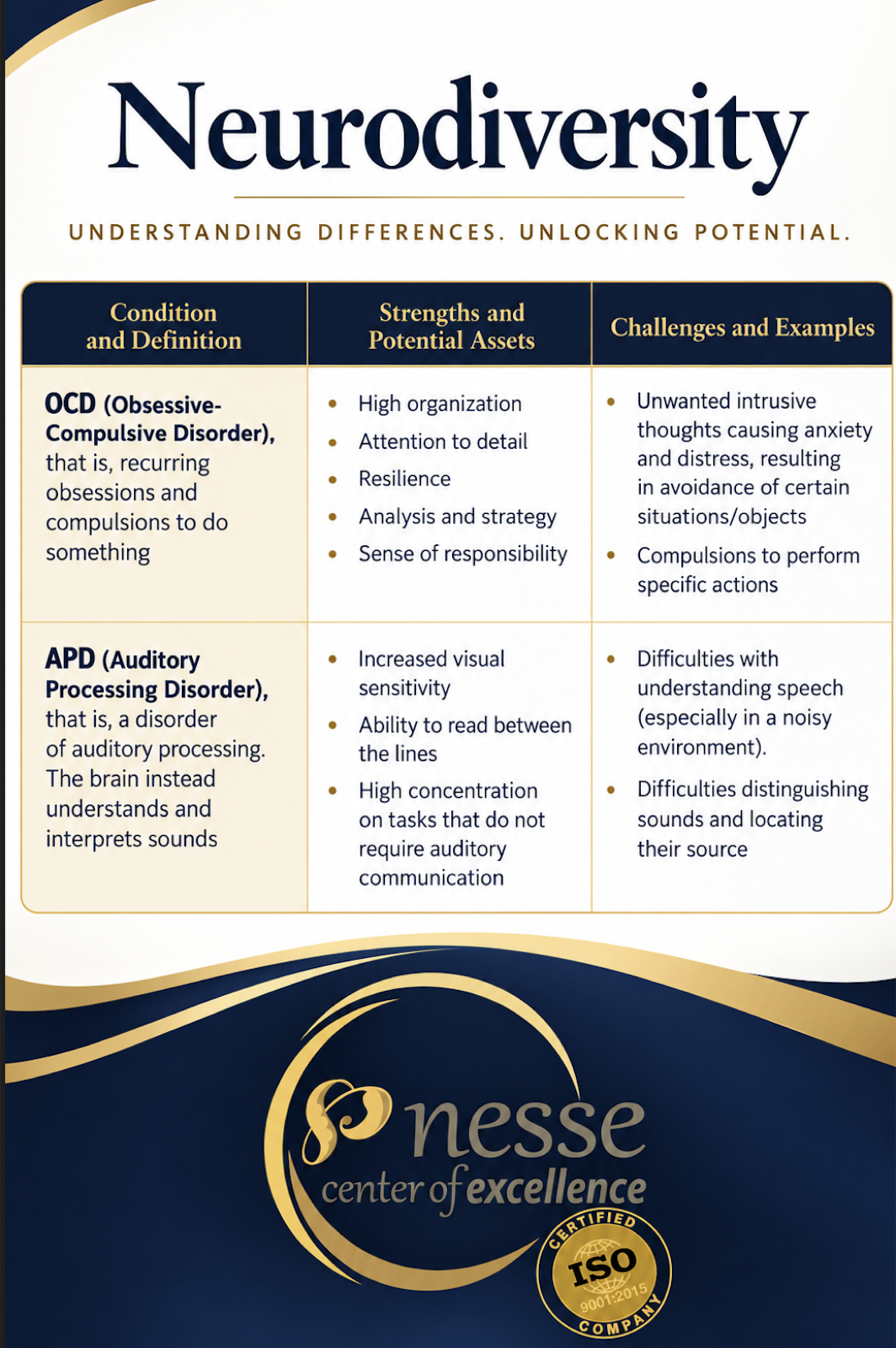
Below are a few faces of neurodiversity. It is worth getting a general picture of them. But let’s remember to refrain from making hasty diagnoses on the basis of a few traits we notice.
The overview below is meant to make it easier to observe what an employee is naturally good at, and where forcing them to improve will cause them unnecessary stress and us frustration.
If, however, we achieve managerial success and the employee opens up to us and tells us about their neurodivergence, we should explore the topic and consider what I, as a manager, can change in my management style to make things easier for the employee.
The table below shows only some forms of neurodivergence and their possible talents and challenges. Remember that every person is different. They may have different characteristics as well as different life and professional experiences through which they have acquired various adaptive strategies.